
Allison Karthaus • February 25, 2026
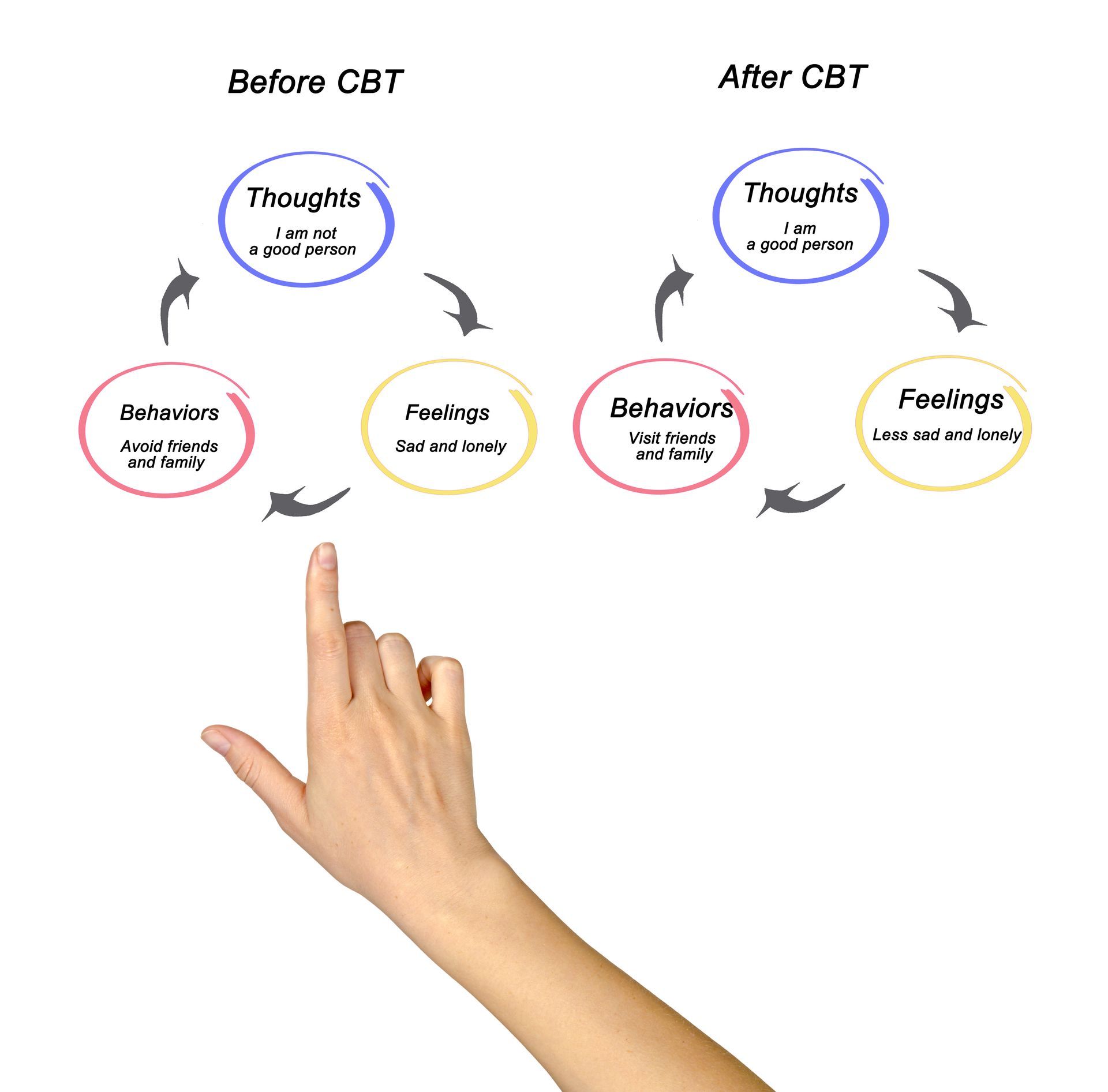
Cognitive Behavioral Therapy (CBT) is one of the most widely used and researched treatments for a variety of mental health concerns. This evidence-based treatment focuses on the relationship between and impact of thoughts, feelings, and behaviors. CBT is one of the most effective forms of therapy, with evidence supporting it’s effectiveness with treating anxiety, depression, OCD, and trauma-related conditions. For people in Boston seeking mental health support, understanding cognitive behavioral therapy Boston providers offer can help you make informed choices. This article explains what CBT is, how it works, and how we integrate CBT Aviva Psychology Services.
The history of Cognitive Behavioral Therapy, from theory to structured treatment.
Cognitive Behavioral Therapy is based on one key idea: thoughts, feelings, and behaviors are connected. When one changes, the others change too. For example, challenging cognitive distortions, which are negative thoughts about a person, event, etc. can help reduce emotional distress. When we challenge these distortions, it often makes it easier to move towards the thing that made us anxious and potentially change how we think and feel about it over time. This connection is the foundation of CBT and interventions can start at any point on the triangle. CBT was originally developed by psychiatrist Aaron Beck in the 1960s and influenced by the work of psychologist Albert Ellis (who founded Rational Emotive Behavioral Therapy). Dr. Beck focused primarily on the cognitive distortions and created a structured treatment for depression. He believed that our interpretations of events shape our emotions, not the events themselves.
Since the 1960’s, behavioral therapy has integrated with cognitive therapy, and Dr. Judith Beck, Aaron Beck’s daughter, founded the Beck Institute for Cognitive Behavioral Therapy, which continues to be one of the premier research hubs for this approach to mental health treatment. Modern CBT is used in a variety of treatment settings and can help with conditions across the psychological spectrum. It’s a present focused treatment, that involves identifying specific problems and setting clear goals. CBT treatment is full of practical skills that your psychologist teaches you and you begin to use between sessions relatively early in treatment. This structure works well for people who want clear treatment plans. At Aviva, we aim to always meet our clients where they are. We utilize both structured and flexible CBT techniques based on the specific needs and treatment plan of each client.
Common Myths About Cognitive Behavioral Therapy
Several myths about CBT persist despite strong research support. These beliefs create barriers to getting help. They cause harm by discouraging people from seeking effective treatment.
Myth 1: CBT is just positive thinking
This belief minimizes how evidence-based CBT actually is. CBT does not replace negative thoughts with fake positive ones. Research shows CBT teaches realistic thinking based on evidence. You examine thoughts for accuracy, not force optimism. For example, if you think "I will definitely fail this presentation," CBT does not replace it with "I will definitely succeed." Instead, you evaluate the evidence for and against this prediction. You consider other possible outcomes. You develop coping strategies for any result. This realistic approach is different from positive thinking.
Myth 2: CBT ignores emotions
This misconception suggests CBT is cold or dismissive. However, CBT directly addresses how thoughts and emotions relate. Understanding thought patterns helps you manage emotional responses better. CBT recognizes that emotions give important information about your needs. The approach does not suppress feelings. Instead, it helps you understand what triggers specific emotions. You develop skills for managing intense emotions when they arise. Some CBT methods focus specifically on emotional processing.
Myth 3: CBT is a quick fix
This belief creates unrealistic expectations about therapy timelines. Research shows CBT typically takes 12–20 sessions for most concerns. You need ongoing practice between sessions for lasting change. CBT is often shorter than some other therapy types, but it is not instant. Progress requires active work, including practicing skills outside therapy. Some concerns need more time, especially complex or long-standing difficulties. The structured nature of CBT reflects clear treatment targets, not rapid results without effort.
How Cognitive Behavioral Therapy Works
CBT follows a systematic process where you identify, examine, and modify unhelpful thought and behavior patterns. The approach has several connected steps that build throughout treatment.
Identifying Thought Patterns
CBT starts by identifying automatic thoughts. These are immediate mental responses in specific situations; our immediate raw thoughts about a situation (oh that was awful or I always screw that up). These thoughts often follow predictable patterns called cognitive distortions, systematic errors in thinking that skew our perception of reality. The Beck Institute provides a comprehensive worksheet listing common cognitive distortions and examples of how they appear in daily life. For example, all-or-nothing thinking means viewing situations in extremes. You see things as completely good or completely bad completely good or completely bad. Another negative automatic thought or cognitive distortion is catastrophizing, or expecting the worst outcome even when evidence suggests otherwise. Research shows recognizing these patterns is the first step to changing them.
Other common distortions include overgeneralization (when one negative experience becomes a pattern you expect to repeat forever), mental filtering ( focusing only on negative details while ignoring positive information), mind reading ( assuming you know what others think without evidence), and fortune telling (making negative predictions about the future as if they are facts). These distortions happen automatically. However, we can begin to recognise and label these automatic negative thoughts as cognitive distortions. Examining and Testing Thoughts.
Once you identify negative automatic thoughts, you begin labeling and evaluating them. Together with your psychologist, you start to examine evidence supporting and contradicting specific thoughts; you consider alternative explanations and conduct behavioral experiments to test predictions. For example, someone who believes "I cannot handle social situations" might attend a small gathering. They observe what actually happens. Research shows behavioral experiments are especially effective because they provide direct evidence that challenges old assumptions.
During treatment you also evaluate the consequences of maintaining specific thought patterns. Often negative automatic thoughts aren’t totally out of the blue. There can be a little sliver of evidence that these cognitive distortions hold on to. While, a thought may be technically accurate in some narrow way. But it might still be unhelpful if it prevents action or creates unnecessary distress. CBT helps you distinguish between useful thoughts and problematic ones. Cognitive restructuring techniques help you develop more balanced interpretations and move towards behaviors and situations that align with your values and goals.
Building Skills
Beyond examining thoughts, CBT emphasizes skill development. Problem-solving strategies help you break down overwhelming situations into manageable steps. Coping techniques, such as breathing exercises and grounding techniques, provide tools for managing distress in the moment. Behavioral activation involves increasing engagement in valued activities. This is especially important for treating depression. Research shows behavioral activationalone can be as effective as full CBT protocols for some people with depression.
One of the most essential skills in CBT is relapse prevention. Planning for a transition from treatment is an explicit part of skill development and is crucial as treatment nears completion. This involves identifying early warning signs that difficulties may return and developing strategies for managing setbacks. The goal is not to prevent all future difficulties. Instead, you gain skills for managing challenges independently and how to know when to reach out for additional support.
Conditions and Concerns Addressed by Cognitive Behavioral Therapy
Research shows CBT is effective for a wide spectrum of mental health disorders. It has been shown to effectively treat anxiety, depression, obsessive compulsive disorders, PTSD, insomnia, and the impacts of chronic pain.
CBT is effective in treating anxiety, including generalized anxiety disorder, panic disorder, social anxiety, and phobias. Studies suggest 60–80% of people with anxiety disorders improve significantly with CBT. The approach helps you identify anxiety-triggering thoughts and gradually face feared situations through exposure techniques. This is done through developing coping strategies for managing anxiety symptoms, restructuring negative automatic thoughts, and setting up "experiments" to move towards the anxious triggers.
CBT also works for depression. A comprehensive 2023 meta-analysis of over 400 trials found CBT is as effective as antidepressant medication in the short term, with evidence suggesting even greater effectiveness over time. CBT for depression focuses on identifying and modifying negative thought patterns while increasing engagement in activities that provide pleasure or accomplishment. For severe depression, combining CBT with medication may work best.
For Obsessive-Compulsive Disorder (OCD), a specific form of CBT called Exposure and Response Prevention (ERP) is the gold-standard treatment. Research shows ERP is highly effective for reducing OCD symptoms. At Aviva Psychology, our therapists are trained in ERP. We provide this specialized form of CBT for people experiencing OCD.
CBT is also used for Post-Traumatic Stress Disorder (PTSD), often with exposure-based techniques. For insomnia, Cognitive Behavioral Therapy for Insomnia (CBT-I) is the first-line treatment. Research suggests it is more effective than sleep medication for long-term outcomes. Aviva Psychology offers a specialized Insomnia Clinic where we provide CBT-I.
Other concerns that may benefit from CBT include chronic pain, relationship difficulties, and adjustment to chronic illness. At Aviva Psychology Services, our Chronic Pain Clinic integrates CBT with clinical health psychology approaches. Our Perinatal Mental Health services incorporate CBT for postpartum depression and anxiety.
Cognitive Behavioral Therapy and Related Approaches
CBT differs from psychodynamic therapy in several ways. Psychodynamic approaches often focus on childhood experiences. CBT aims to briegly understand the childhood events that contribute to present thoughts, but focuses mainly on present concerns and thought patterns. CBT is typically time-limited with specific goals, where psychodynamic therapy is often more open-ended. However, neither approach is inherently superior. The best treatment depends on your preferences, concerns, and goals.
Several therapy approaches build on CBT principles. Dialectical Behavior Therapy (DBT) extends CBT with skills for emotion regulation and distress tolerance. At Aviva Psychology Services, some therapists integrate DBT skills training with CBT when clients benefit from this combination.
Acceptance and Commitment Therapy (ACT) is one of the foundations of the third wave of CBT therapy. ACT incorporates mindfulness and acceptance skills with cognitive and behavioral strategies. Rather than focusing on challenging thoughts directly, ACT emphasizes acceptance of difficult internal experiences and learning to cope and move through these difficult experiences. ACT focuses mainly on behaviors that are aligned with your personal values. Often, thoughts and feelings hold us back from pursuing valued actions. ACT focuses mainly on the valued actions and reducing avoidance of internal experiences that contribute to difficulties and distress.
At Aviva Psychology, therapists may blend CBT with complementary approaches based on your needs and preferences. Treatment is tailored to your circumstances rather than following a rigid protocol. This flexibility allows integration of multiple evidence-based techniques while maintaining the structured nature of CBT. Learn more about our approach to therapy.
What to Expect in Cognitive Behavioral Therapy at Aviva
Initial Consultation
CBT at Aviva Psychology Services begins with an initial consultation. We assess your concerns, goals, and history. Together, you and your psychologist develop a treatment plan and learn about the CBT framework. This treatment planning process helps determine whether CBT is appropriate for your concerns. It also helps you and your psychologist assess therapeutic fit. The American Psychological Association reports that the therapeutic relationship is one of the most important factors in treatment outcomes, regardless of therapy type.
Typical Session Structure
CBT sessions at Aviva Psychology last 53-55 minutes. Sessions typically start with a check-in about your experiences since the last session. You review any between-session practice or assignments. The middle portion focuses on skill-building or application work related to your goals. Sessions end with summarizing key points and assigning practice for the coming week. This structure provides consistency while remaining flexible for emerging concerns.
Timeline and Frequency
Research shows CBT typically involves 12–20 sessions for most concerns. The exact duration varies based on your needs and the complexity of difficulties. Sessions are usually scheduled weekly during initial phases. As skills develop and symptoms improve, sessions may be spaced to every other week. Regular progress evaluation ensures treatment stays aligned with your goals. Adjustments are made when needed in consultation with your psychologist.
Between Sessions
Practice between sessions is crucial in CBT. This may include monitoring thoughts in specific situations. You practice skills introduced in therapy. You conduct behavioral experiments. These assignments are opportunities to apply new learning in real-world contexts. Research shows people who engage in between-session practice improve more than those who only work on skills during therapy sessions.
Aviva-Specific Features
At Aviva Psychology Services, CBT can be conducted via telehealth or in person. Our group practice model allows us to match you with therapists whose specializations align with your needs. Aviva Psychology Services is unequivocally BIPOC and LGBTQIA2S+ affirming. Our therapists provide identity-centered, culturally responsive care. We understand that mental health concerns do not occur in isolation. Identity, culture, and systemic factors influence psychological well-being. Learn more about our approach to anxiety therapy.
Is Cognitive Behavioral Therapy Right for You?
CBT may help if you are seeking evidence-based treatment and prefer structured, goal-oriented approaches. It works well when you are willing to engage in active practice between sessions. The approach works best when you are ready to examine thought patterns and try new behaviors, even when uncomfortable.
However, CBT is not the only effective therapy. It may not be the best fit for everyone. Some people prefer more exploratory or less structured therapy. Others may benefit from approaches that emphasize emotional processing or past experiences. These preferences are valid. There is no single correct path to mental health support.
CBT can be combined with other approaches as needed. Some people benefit from starting with supportive, relationship-focused therapy before transitioning to structured CBT. Others may integrate CBT with medication management. At Aviva Psychology Services, we take a collaborative approach to treatment planning. An initial consultation clarifies whether CBT aligns with your goals and preferences. Treatment can be adjusted based on your response over time.
If you have concerns about homework assignments due to energy limitations, cognitive difficulties, or time constraints, discuss this with your therapist.
Assignments can be modified to be more manageable. Some CBT work can occur primarily within sessions. The goal is to find an approach that works for your circumstances.
Finding a Cognitive Behavioral Therapy Provider in Boston
When seeking a CBT therapist, several factors matter. Training and certification in CBT indicate a provider has received specific education in this approach. Experience with your specific concerns is important. CBT protocols differ across conditions. Cultural competence and identity-affirming practice matter, especially for people from marginalized communities. The therapeutic relationship and sense of trust influence treatment outcomes across all therapy approaches.
At Aviva Psychology Services, our doctoral level clinicians utilize CBT in structured and flexible modalities to treat anxiety disorders, depression, OCD, and PTSD. Additionally, we have specialty clinics for insomnia, chronic pain, chronic illness, and perinatal mental health, all utilizing CBT as a part of the modality of treatment.
Several of our psychologists have received specialized training in evidence-based CBT protocols. This includes Exposure and Response Prevention for OCD and Cognitive Behavioral Therapy for Insomnia. Our group practice model allows thoughtful matching between clients and therapists. Matching is based on clinical needs, identity considerations, and therapeutic style preferences. Meet our team of CBT-trained therapists.
If you want to learn more about CBT at Aviva Psychology, contact us to schedule an initial consultation. The consultation provides an opportunity to discuss your goals and ask questions about our approach. You can determine next steps without any obligation to continue treatment.
Conclusion
Cognitive Behavioral Therapy is an evidence-based approach that helps people understand connections between thoughts, feelings, and behaviors. Research shows CBT works for many mental health concerns, from anxiety and depression to OCD and insomnia. At Aviva Psychology, our CBT-trained therapists provide identity-affirming, culturally responsive care adapted to individual needs.
If you are considering therapy and want to explore whether CBT might be appropriate for your concerns,
we are here to help.
SHARE THIS POST:
Our Recent Posts: